The 1990s throughout the 1990s
Polar Fleece
A soft, warm, quick-drying polyester pile developed by Malden Mills with Patagonia around 1980, which in the 1990s moved from mountaineering kit to the everyday zip-up of half the population - and, from 1993, began to be made from recycled bottles.
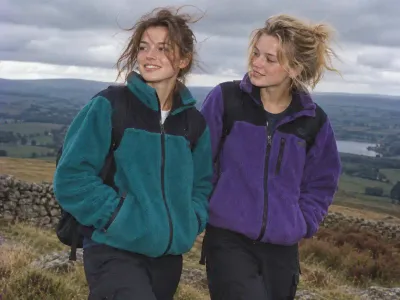
Few fabrics went from specialist to everyday as quickly as polar fleece. In the 1980s, it was something mountaineers wore; by the mid-1990s, everyone seemed to own a fleece jacket. For me, it's one of the defining fabrics of the decade's casual wardrobe.
Fleece is a knitted polyester fabric that's been brushed to raise a thick, soft pile on one or both sides, a little like the nap on wool. That structure traps warm air, making it very warm for its weight. Unlike wool, it doesn't hold much water, so it dries quickly and stays warm even when damp, and it's light, soft, and machine washable. The fabric was developed at the end of the 1970s by the Massachusetts textile company Malden Mills, working with the outdoor clothing company Patagonia, as a synthetic alternative to traditional wool layers for climbers and hikers. Malden Mills later sold it under the trade name Polartec.
In the 1990s, fleece jumped from mountain gear to the high street. Fleece jackets, zip-up pullovers, gilets, and hats became standard casual wear for adults, teenagers, and children, in plain colours and bright colour-blocks. They suited the decade's relaxed, practical mood, and they were part of a broader trend for wearing outdoor and sports clothing in everyday life, alongside performance fabrics and cargo pants. Cheap fleece became widely available, which made it almost universal.
Fleece also has an environmental story. In 1993, Patagonia began making fleece from recycled plastic bottles, one of the first major uses of recycled polyester in clothing. At the time, it seemed a clear environmental win. Today, the picture is more complicated: we now know that synthetic fabrics like fleece shed tiny plastic fibres, or microplastics, when washed, which end up in rivers and oceans.
There's also a lovely human story attached to it. When the Malden Mills factory burned down in 1995, its owner, Aaron Feuerstein, kept paying his workers while it was rebuilt, and became famous for it. I think fleece is a fascinating example of how an innovative fabric can transform everyday dress, and how our view of a material can change as we learn more about its effects.