The 1960s mid-1960s
Paper and Disposable Fashion
A genuine novelty gimmick - non-woven, cellulose-based dresses meant to be worn a handful of times and thrown away - that briefly became a real, if short-lived, retail category in its own right.
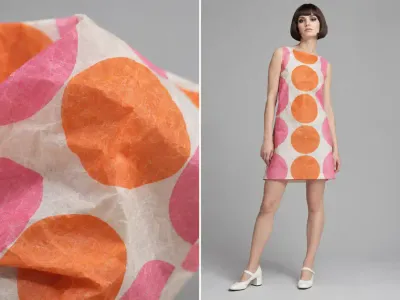
The paper dress is one of the stranger detours this decade takes, and I mean that as a genuine compliment - it's exactly the kind of oddity a project like this exists to cover in real depth rather than as a footnote. In 1966, the Scott Paper Company ran a promotional campaign offering a simple A-line shift made from a non-woven, cellulose-based fabric (not literal writing paper, but close enough in feel and fragility that the name stuck) for around a dollar plus a coupon, mostly as advertising for their actual product line of paper household goods. The response was well beyond what anyone at Scott expected: hundreds of thousands of orders, and within a year or so a small but genuine fashion industry had sprung up around disposable garments made from the same basic material.
Construction-wise, these dresses were about as simple as this project ever documents: cut flat, minimally seamed (often with the seams simply glued or the fabric die-cut into shape rather than sewn), and explicitly not designed to survive more than a few wears or a single trip through the wash. That's the whole point rather than a flaw - a paper dress was priced and built to be worn to a party or two and discarded, riding the same throwaway-culture logic that was making disposable plates, cups, and diapers newly normal in the same mid-60s consumer moment. Some versions leaned into novelty prints - op-art patterns, campaign slogans, even printed advertisements - treating the garment itself as a wearable piece of mass media rather than clothing meant to last.
The fad had mostly burned out by 1968, which makes sense once you think about it as a novelty rather than a genuine technology - paper dresses were never comfortable, never especially flattering, and tore easily in exactly the ways you'd expect. But I think the episode is worth taking seriously anyway, because it's a remarkably clean example of this decade's broader instinct to question whether clothing needed to be an investment at all. A garment engineered from the outset to be worn briefly and thrown away is a genuinely radical proposition against centuries of dressmaking tradition built around durability and repair, even packaged here as a throwaway marketing gimmick rather than a serious statement.