The 1960s late 1960s
Black is Beautiful and the Civil Rights Movement
A cultural and political movement that rejected white beauty standards outright - natural hair, African-inspired prints and silhouettes worn as deliberate affirmation rather than as a passing fashion trend.
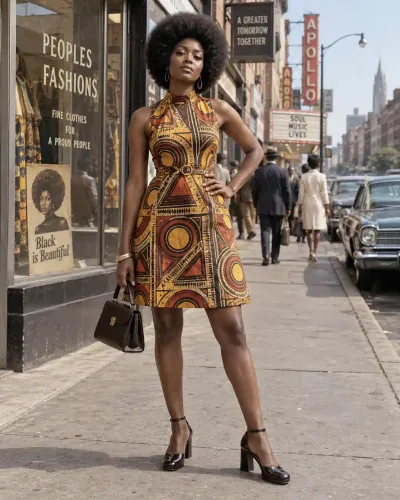
The "Black is Beautiful" movement, gaining real cultural momentum through the second half of this decade alongside the broader civil rights and Black Power movements, was never primarily a fashion story - it was a direct political and cultural rejection of the idea that beauty and professionalism required conforming to white American standards, particularly around hair texture and styling. Wearing natural, unstraightened hair - increasingly styled into a full afro by decade's end - was a genuinely public statement in an era when chemically straightened hair had been treated as close to a professional and social requirement for Black women in mainstream American life.
Clothing followed a parallel logic: African-inspired prints, particularly bold wax-print textiles, along with garments like the dashiki, moved from being read as foreign or exotic by a mainstream fashion press into being worn deliberately as affirmations of Black identity and heritage, a direct visual counter-statement to decades of pressure toward assimilation. This connects to the same broader instinct toward ethnic and global textile references that the following decade's fashion runs with more widely, though the political stakes and meaning behind these specific choices in the late 1960s were considerably more pointed and personal than the following decade's more general bohemian eclecticism.
I think this entry deserves the careful, dedicated treatment it's getting here rather than folding it into a broader youthquake or counterculture narrative, because the stakes and the intent were categorically different from most of this decade's other style shifts - this wasn't young people rejecting an older generation's aesthetic preferences, it was a direct challenge to beauty standards that had real, material consequences for Black women's lives, professional and otherwise. Treating hair and dress as identity politics rather than pure style choice is a thread that runs through American fashion history well beyond this one decade, and it starts, in a real and documented way, right here.