The 1960s early 1960s
Jackie Kennedy and the Camelot Effect
A First Lady in her early thirties, photographed constantly and dressed with real consistency, did more to define early-60s American style than any single runway collection managed to.
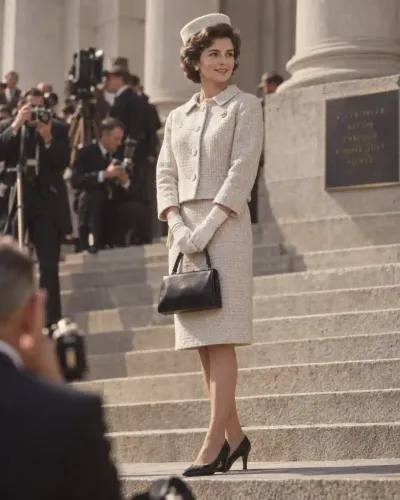
Jacqueline Kennedy became First Lady at thirty-one, young for the role by a wide margin, and the press attention on her personal style from Inauguration Day forward was genuinely unlike anything an American First Lady had experienced before - less "notable public figure who dresses well" and more ongoing, magazine-cover-level fashion coverage treating her wardrobe as real news in its own right. That level of sustained visibility is really the whole mechanism behind this entry: it's not that her clothes were more inventive than what Paris couture was producing at the same moment, it's that almost nobody else in America was being photographed this often, this closely, in this consistent a personal style.
The style itself - covered in construction detail in the Jackie look silhouette entry and the pillbox hat entry - was disciplined and consistent rather than dramatic: structured skirt suits, simple sheath dresses, a small round hat, and a general preference for clean lines over embellishment, much of it designed by Oleg Cassini working specifically as her personal designer. That consistency is arguably the more important detail than any single garment - dressing recognizably the same way, week after week, in front of a national and international press corps, is what actually let the look calcify into a genuine, reproducible style other women could copy, rather than remaining a series of one-off "the First Lady wore" headlines.
The "Camelot" label itself gets attached retroactively, after the 1963 assassination, borrowed from the Lerner and Loewe musical Kennedy's widow specifically invoked in a Life magazine interview shaping how the whole administration would be remembered - but the style's actual cultural work happened in real time, those first three years, before the tragedy that named it. I think that's worth being precise about: this entry is about the genuine style influence a young, constantly photographed political spouse exerted on ordinary American women's closets between 1960 and 1963, not about nostalgia manufactured after the fact.