The Victorian Era Victorian era, broadly
Silk
One of the two dominant fibers of Victorian dress, prized for its drape and sheen across day, evening, and mourning wear alike.
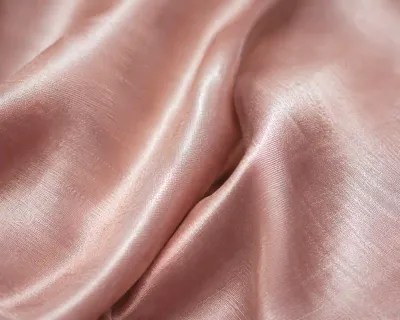
Silk shows up everywhere in this era, from crinoline-era ballgowns to the crape used in mourning - it's remarkable how much work one fiber does across such different registers of dress.
Sourcing shifted meaningfully across the period, and it's a good window into the era's broader industrial and colonial trade patterns. French silk, especially from Lyon's enormous weaving industry, remained the benchmark for quality fashionable fabric throughout the century - Lyon's Jacquard-loom weavers supplied patterned silks to Worth and the rest of the Paris couture trade directly. But raw silk itself increasingly came from further afield as European sericulture struggled with disease outbreaks among silkworms mid-century (a genuine crisis in the French and Italian silk industries during the 1850s and '60s), pushing raw silk sourcing toward China and, increasingly, British colonial India, where production was actively expanded to feed European mills. That's the same colonial trade infrastructure discussed in the culture entry on colonial and imperial trade - silk is one of the clearest individual-fabric examples of how thoroughly Victorian fashion depended on empire-scale supply chains, even for a fiber Europe had been weaving domestically for centuries.
Weaving itself industrialized steadily rather than suddenly. Jacquard looms, punch-card-programmed to weave complex patterns automatically, had already existed since the early 1800s, but their broader adoption through the Victorian decades dramatically increased how much patterned silk - brocades, damasks, figured silks - a mill could turn out, and at what cost, compared to hand-drawn pattern weaving. That's what let silk stay genuinely ubiquitous across such different registers of dress at once: crinoline-era ballgowns, everyday trim, and, in its dulled crape form, the strictest mourning wear all draw on the same fiber, just processed and finished toward completely different ends. Very few materials do that much range across a single era's wardrobe, which is part of why I keep returning to silk as a kind of connective thread running underneath almost everything else in this section.