The Victorian Era Victorian era, broadly
Mourning Crape
A dull, crimped silk fabric reserved almost exclusively for the earliest and strictest stage of mourning dress.
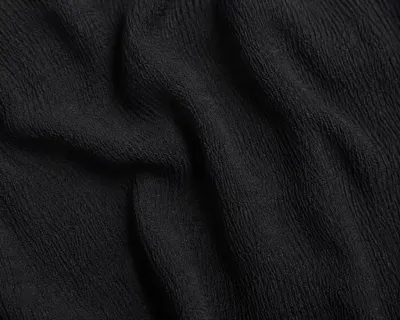
Crape is a strange, specific fabric - its whole purpose was to look deliberately lightless, which is exactly why it became the visual marker of "deepest mourning" before a widow could move into later, less severe stages.
The manufacturing process is exactly what gives crape its distinctive dead-matte surface. It starts as ordinary silk, but the yarn is given a hard twist before weaving, and the finished fabric is then passed through heated, crimped rollers (or, in the earlier hand-finished version, gauffered by hand) that press a permanent, tightly rippled texture into the surface. That crimping is what kills the sheen a silk fabric would otherwise have - light scatters across all those tiny ridges instead of reflecting cleanly - which is precisely the "deliberately lightless" quality Victorian mourning etiquette demanded for its earliest, strictest stage. Courtaulds, the English manufacturer, dominated crape production for much of the century and became so closely associated with the fabric that "Courtauld's crape" was practically a generic term for mourning crape by mid-century, in the way a brand name sometimes swallows an entire product category.
It was also, by every contemporary account, genuinely miserable to own and maintain. Crape didn't tolerate rain well - water spotted it permanently and could transfer black dye onto the wearer's skin, a real and frequently complained-about problem - and it couldn't be cleaned using ordinary period methods without ruining the crimped texture that was the entire point of the fabric. Dresses trimmed heavily in crape were consequently treated as close to disposable, worn hard through the strict early mourning period and then set aside rather than preserved and re-worn, which meant a household observing several mourning periods in succession (not uncommon given period mortality rates) faced real, repeated expense just to stay within etiquette's rules. That practical misery is worth holding next to the fabric's symbolic power - crape did exactly the emotional and social work it was designed to do, but it extracted a genuine, well-documented cost from the people wearing it while it did.