The Victorian Era Victorian era, broadly
Cotton and Calico
Cheap, washable, and mass-produced at industrial scale - the fabric most Victorian women actually wore day to day, standing in real contrast to the silk and velvet this section otherwise spends so much time on.
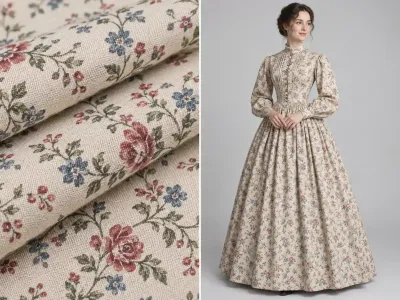
Cotton, and specifically the plain, inexpensively printed cotton cloth known as calico, was the actual everyday fabric of most Victorian women's wardrobes, in a way that silk, velvet, and fine wool tweed simply weren't. The Industrial Revolution's textile mills, concentrated heavily in northern England, could spin and weave cotton at a scale and cost no natural fiber had previously approached, and printed calico in particular - patterned using cylinder printing methods that got faster and cheaper across the century - gave working and middle-class women access to colorful, washable fabric that would have been entirely out of reach as silk.
That washability is worth taking seriously as a real practical advantage, not just an economic one. Cotton tolerates repeated laundering far better than silk or fine wool, which mattered enormously for working women's clothing and for children's garments especially, both of which needed to survive frequent washing that would have damaged more delicate fabrics quickly. This is a genuinely different fabric story than the aniline dye revolution covered elsewhere in this section, which transformed what colors were available at the fashionable end of the market - cotton and calico's revolution was about who could access clothing at all, at a price point and durability level that actually matched most households' real daily needs.
I think this entry is worth including specifically to correct a skew running through a lot of this project's Victorian coverage, myself included - silk, velvet, and elaborate trim make for more visually striking entries, but most Victorian women, most of the time, were not wearing those fabrics. Cotton and calico are the actual textile backbone of the era for the overwhelming majority of the population, and any honest picture of Victorian dress needs to account for that gap between the fashion plates and the fabric bolt most households were actually buying from.