The Victorian Era Victorian era, broadly
Colonial and Imperial Trade
Britain's imperial trade networks shaped which fabrics and dyes were available and affordable throughout the era - cotton, silk, and indigo among them - tying fashionable dress directly to colonial extraction.
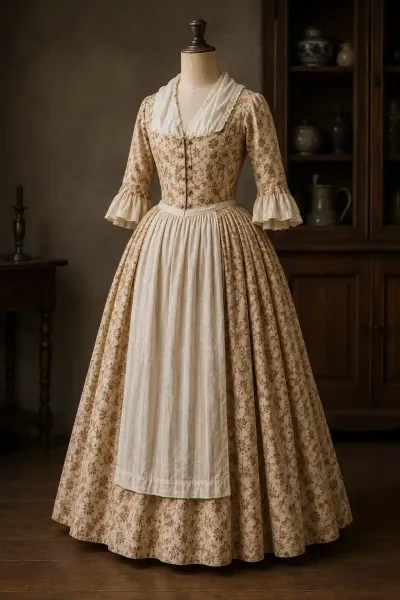
This is a thread I don't want to gloss over: the raw materials behind so much Victorian fashion - cotton, dyes, silk - moved through colonial trade networks built on extraction and, earlier in the century, on slavery. The silhouettes and fabrics get most of the attention in casual fashion history, but where the materials actually came from is part of the real story too.
Cotton is the starkest example, and it's worth being direct about the timeline rather than softening it. Through the first decades of Victoria's reign, the overwhelming majority of raw cotton feeding Britain's massive textile mills came from the American South, produced by enslaved labor - a supply chain that fed everything from everyday printed calico to the muslin linings inside far more expensive garments, meaning cotton's presence in a Victorian wardrobe wasn't a minor detail but a direct, continuous link to slavery for the era's first quarter-century. The American Civil War (1861–1865) disrupted that supply catastrophically - the "Lancashire Cotton Famine" threw much of Britain's textile-manufacturing region into real crisis and unemployment - and Britain responded by aggressively expanding cotton cultivation in colonial India and Egypt to reduce dependence on American supply, which didn't end the exploitative labor conditions behind the fiber so much as relocate and reorganize them within the empire's own colonial system.
Indigo tells a similarly direct story: the blue dye behind so much fashionable and everyday fabric through the century was cultivated primarily in British-controlled Bengal, under a forced-cultivation system so punishing to local farmers that it triggered the 1859–60 Indigo Revolt, a genuinely significant and under-discussed uprising against the plantation system supplying Europe's dye demand. Silk, tea, and countless other materials threading through the fashionable Victorian wardrobe trace similarly direct lines back to colonial extraction and labor systems across India, China, and elsewhere in the empire. I think it's important to hold both things at once in a section like this: the aesthetic and technical history of Victorian dress is genuinely fascinating, and it's also inseparable from an extraction economy that made the raw materials cheap and abundant enough to fuel it - leaving that connection out would make for a tidier story, but not a truthful one.