The 1940s throughout the 1940s
The Tea Dress
A knee-length day dress in printed rayon crepe, with gathered shoulders, a V or sweetheart neckline, and a gently flared skirt - the decade's everyday dress, and its most copied one today.
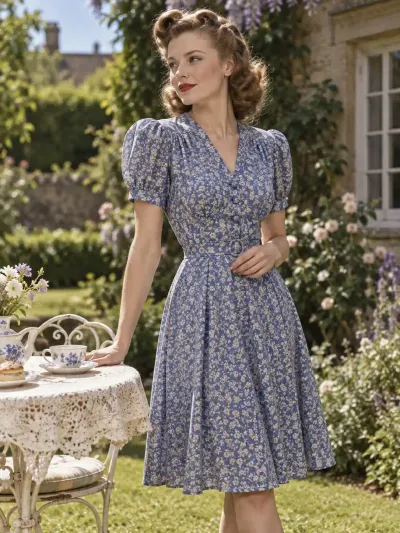
When people buy a "1940s dress" today, nine times out of ten they're buying a version of this: a knee-length day dress in a small floral or novelty print, with short puffed or gathered sleeves, a V-neck or sweetheart neckline, a fitted waist, and a softly flared or gored skirt. It's the everyday dress of the decade - what women wore to the shops, to the office, to church, and to tea, which is where the name eventually comes from.
The fabric is key. Most tea dresses were made in rayon crepe, which draped and moved well, took prints brightly, and was far more available than silk or wool during the war. Cotton versions, including home-sewn dresses made from feedsack prints, sit right alongside them. The prints themselves are a big part of the charm: small-scale florals, polka dots, and novelty motifs that were both cheerful and practical, since a busy print hides wear, mending, and the odd stain far better than a solid colour.
Construction-wise, what I love about the 1940s tea dress is how much shaping it gets out of very little fabric. Gathers or small pleats at the shoulder give a soft fullness over the bust and let the shoulder sit square, bodice darts and waist seams give a close fit, and the skirt uses gores or a gentle A-line rather than yards of gathering. Closures were often a side placket with snaps or a short zip, depending on what was available. It's a pattern that suits almost everyone, which is exactly why it keeps coming back - and why it was such a natural candidate for remaking once it wore thin.