The 1940s throughout the 1940s (from the 1920s-30s)
Feedsack Cotton
Printed cotton sacks for flour, sugar, and animal feed, designed to be turned into dresses, aprons, and children's clothes once emptied - the fabric of rural and working-class home sewing.
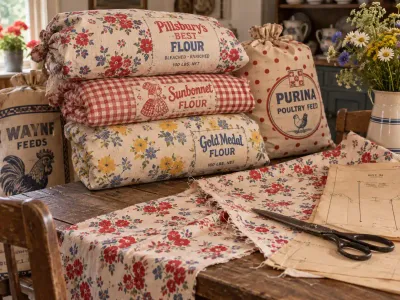
Feedsack cotton is the least glamorous fabric in the 1940s section and possibly my favourite. Flour, sugar, and animal feed in America were sold in cotton sacks, and thrifty women had been unpicking, bleaching, and sewing them into clothes, dishcloths, and quilts for decades. At some point manufacturers realised this was a selling point, and by the 1930s they were printing the sacks with genuinely pretty dress-fabric designs - florals, checks, stripes, and novelty prints - so that the empty sack became a bonus length of fabric.
The 1940s is the height of it. Wartime demand for cotton made dress fabric more expensive and harder to get, while the sacks kept arriving with every delivery of flour or feed. A standard sack gave you roughly a yard of fabric, so a dress took several - which led to one of the best details of the whole story: women choosing which sack of feed to buy based on the print, sending husbands to the feed store with a scrap to match, and trading sacks with neighbours to collect enough of one design. Manufacturers even competed on print design, hiring textile artists to make their sacks more appealing. Paper labels were designed to soak off easily so they didn't spoil the cloth.
What you end up with is a whole parallel fashion system running alongside department-store clothes, especially in rural and working-class households: home-sewn tea dresses, aprons, children's clothes, and shirts in feedsack prints, often made from commercial patterns. It's the everyday counterpart to the more urban make do and mend culture, and I think it's a lovely reminder that a lot of 1940s women's style came out of their own sewing machines, not a shop window. Vintage feedsack is heavily collected by quilters today, and it's easy to see why.