The Victorian Era Victorian era, broadly
Gloves and Etiquette
A near-mandatory accessory governed by genuinely elaborate etiquette - when to wear them, when to remove them, and what it signaled if you didn't.
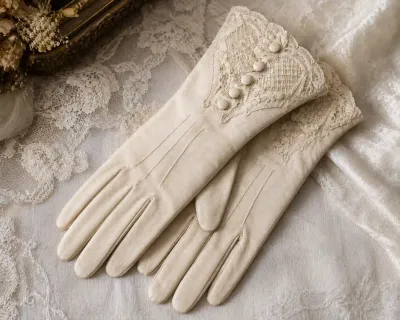
I find the etiquette here more interesting than the gloves themselves - entire rules existed around when it was acceptable to remove them (eating, certain card games) versus when keeping them on was the only proper option (most social calls, church).
Day and evening rules genuinely diverged, and getting them backward would have signaled you didn't know what you were doing socially. Daytime gloves were typically shorter - wrist-length - in practical materials like kid or fabric suited to whatever activity was at hand, and etiquette manuals of the period were emphatic that a lady kept them on for nearly the entire duration of a formal call, removing them only in her own home among family. Evening gloves, by contrast, extended well past the elbow to cover the arm left bare by a fashionable evening bodice's short sleeves, typically in the finest kid leather a woman could afford, and here the removal rules flipped: gloves came off at the dinner table specifically for eating, then went back on for dancing, cards, or general mingling once the meal was finished. Getting caught eating in your gloves, or dancing without them, marked you as either careless or simply unfamiliar with polite company - a small detail with real social stakes attached.
What I find genuinely interesting underneath all this ritual is what the gloves were doing symbolically, not just practically. Bare hands in formal Victorian company read as a kind of exposure - a breach of the general modesty the era demanded - so gloves functioned as a portable, wearable extension of that modesty, one you could put on or take off depending on exactly how intimate or formal the moment called for. That's really the underlying logic behind every specific rule: not eating in gloves, not dancing bare-handed, keeping them on for a formal call but off at home - each is really the same principle of matching your degree of "covering" to your degree of social distance, applied to one specific accessory with a level of precision that, from a modern vantage point, looks almost comically detailed until you realize how much cultural information it was actually carrying at the time.