The Victorian Era Victorian era, broadly
The Lady's Maid and the Labor of Dressing
Getting in and out of a fully structured Victorian gown often required another person's hands entirely - a labor dependency that shaped who could actually wear the era's most elaborate fashions.
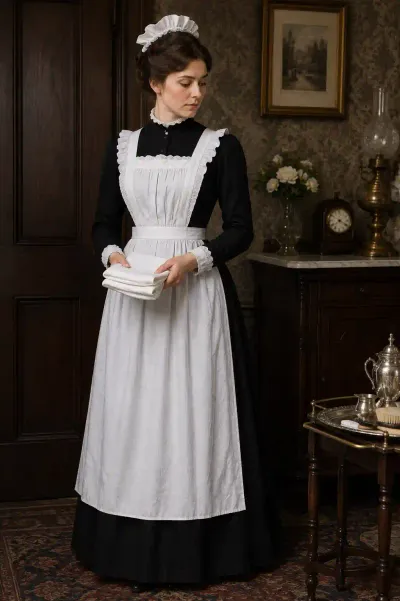
It's worth sitting with this directly: back-fastening bodices, tight lacing, elaborate hair - a huge amount of "fashionable" Victorian dress physically required a lady's maid's help, which makes it as much a class marker as the fabric itself.
A typical routine ran through the day in stages, not as a single event, and each stage had its own specific garment logistics that genuinely needed a second set of hands. Morning dressing usually meant a simpler at-home gown, still often back-fastening, plus hair arranged for the day - manageable, but still a two-person job for anything beyond the very plainest garments. Changing for an afternoon call or, most demandingly, for a formal evening event was the real production: full corseting and lacing pulled to the correct tension (genuinely difficult to do accurately on your own back), a heavily boned and multi-seamed bodice fastened up a long row of back hooks or buttons that were simply out of a wearer's own reach, and elaborate evening hair requiring real skill with hot irons, padding, and pins. A lady's maid attending a client through several such changes in a single day was doing sustained, skilled physical labor - this wasn't an occasional favor, it was a defined job with real technical demands, and a good lady's maid's skill with hair and dressing was a genuine, marketable professional asset.
What this makes visible, more than almost anything else in the wardrobe, is that the era's most fashionable silhouettes were never really designed to be worn independently at all - they were designed around an assumption of available help, which is a very different thing from being simply difficult. A woman without access to a lady's maid, or a husband, sister, or daughter willing to fill that role, was functionally excluded from the most elaborate end of fashionable dress regardless of whether she could afford the fabric, because she'd have had nobody to actually fasten her into it. That's the direct link back to class and dress - the labor requirement is arguably a sharper class boundary than the cost of the garment itself, since it depended on having a servant's ongoing time available, not just money spent once on a dress.