The Victorian Era Victorian era, broadly
Chemise, Drawers and Petticoats
The white layers beneath the corset and dress - a linen or cotton chemise next to the skin, open-crotched drawers, and anything from one to half a dozen petticoats - and why they mattered for hygiene, warmth and shape.
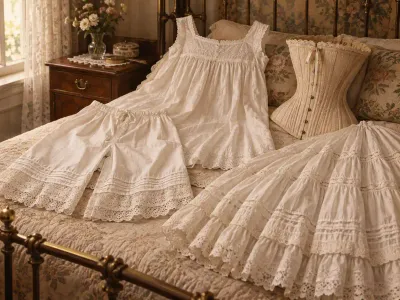
The corset gets most of the attention in Victorian underwear, but it was only one layer of several. Under and around it were plain white garments that did vital work: protecting expensive dresses from the body, keeping the wearer warm, and building the shape of the skirt.
The chemise was the layer closest to the skin. It was a simple, loose, knee-length shift of linen or cotton, with short sleeves or none and a low neckline, worn under the corset. It absorbed sweat and body oils, which mattered because the corset and dress on top could rarely be washed. Chemises were boiled and laundered often, and a woman with enough of them could change daily. They were usually plain, though finer ones had whitework embroidery or lace at the neckline.
Drawers are where Victorian underwear changed most. A few generations earlier, many women had worn nothing between their legs under their petticoats, and even in the 1820s and 1830s drawers were far from standard. Drawers - two separate cotton or linen legs joined at a waistband, open at the crotch for practical reasons - became close to universal by the middle of the century. The cage crinoline is often credited with speeding this up, because a hoop could swing or tip and reveal far more than a woman intended. Later in the century came "combinations," which joined chemise and drawers into one garment, and health-conscious reformers promoted wool underwear for warmth and hygiene.
Petticoats were the bulk. Before the cage crinoline arrived in the 1850s, fashionable skirts were held out by layers of petticoats - sometimes six or more, including stiff horsehair or corded ones and warm flannel ones in winter - which was hot, heavy, and tiring. The cage replaced most of them, but at least one petticoat was still worn over it to hide the ridges of the hoops. In the bustle years, petticoats were shaped with frills at the back to support the skirt, and in the 1890s they were often silk and rustled as the wearer walked.
All of this white linen and cotton needed an enormous amount of washing, starching, and ironing, most of it done by servants or laundresses - a hidden workload covered in the lady's maid entry. I find underwear one of the best ways into Victorian life: every layer tells you something about hygiene, class, labour, and the sheer effort involved in being fashionable.