The 1950s 1950s
Interfacing and Structured Collars
Stiffened fabric layered inside a collar or cuff to hold its shape crisply - a small, unglamorous detail doing a lot of work in the decade's tailored shirtwaist dresses and blouses.
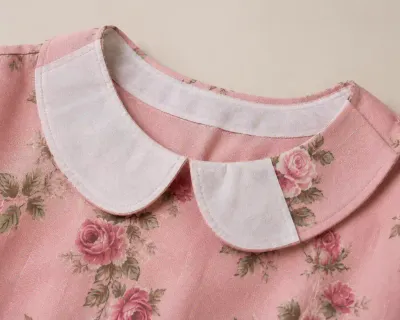
It's one of those details you only really notice once you've tried sewing a collar without it - interfacing is the difference between a collar that holds a crisp line and one that just flops.
Fusible interfacing - the iron-on kind most home sewists reach for automatically today - wasn't widely available yet in this period, so every bit of that crisp structure had to be sewn in by hand or machine, which is a real skill and time difference worth appreciating. Cotton organdy and muslin were common lightweight choices for a soft-but-defined collar, cut to the collar's shape and sandwiched between the outer fabric and a facing or under-collar before the whole piece was stitched and turned. For a crisper, more architectural line - exactly what a shirtwaist dress collar wanted to echo the menswear shirting it was borrowing from - heavier options like hair canvas (a stiff, tailoring-grade interfacing woven with a percentage of actual horsehair for extra body and resilience) or buckram gave real structural rigidity, the kind that holds a sharp point or a stand collar upright rather than just adding a bit of body.
Choosing between these wasn't just a matter of stiffness level, either - each interfacing behaves differently against different outer fabrics, and a good dressmaker of the period would have matched interfacing weight to the garment's overall hand: too stiff an interfacing under a soft cotton shirtwaist reads as clumsy and overbuilt, while too soft an interfacing under a heavier fabric collapses and fails to hold the crisp line the whole look depends on. That's a genuinely fussier calculation than reaching for a single all-purpose fusible interfacing today, and it's part of why a well-made period shirtwaist collar or cuff - sewn in, not fused, and matched carefully to its outer fabric - still holds up as a small but real example of the era's underlying construction sophistication, however plain and unglamorous the finished detail looks from the outside.