The 1950s early-to-mid 1950s
Shoulder Pads
Structured pads set into a bodice's shoulder seam to square and lightly build up the shoulder line - a quieter, more restrained holdover from 1940s tailoring.
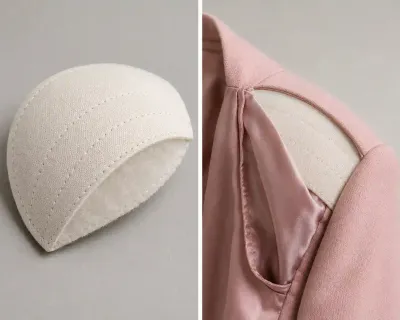
It's easy to associate shoulder pads with the 1980s, but the 1950s version is much subtler - a gentle structure carried over from wartime tailoring rather than the exaggerated power shape that comes decades later.
Early in the decade, pads carried over fairly directly from wartime and late-1940s tailoring habits - a squared, slightly built-up shoulder line that echoed the era's residual military-influenced silhouette, set into the shoulder seam with enough loft to visibly widen and structure the shoulder against a fitted waist below it. That shoulder emphasis made real sense paired with the New Look's dramatic waist cinch: a slightly built-up shoulder line gave the eye a second point of contrast to work against, exaggerating the narrow waist even further by widening what sat above it.
As the decade moves toward its midpoint and shapes like the wiggle dress shift emphasis toward a smoother, more continuous body-skimming line rather than dramatic proportional contrast, shoulder pads shrink correspondingly - thinner, more subtly rounded, doing just enough to keep a shoulder seam sitting cleanly rather than making any real structural statement of their own. By around 1956, many fashionable silhouettes had dropped structured shoulder padding close to entirely, favoring the era's newer, softer shapes and letting fabric and cut do the shoulder's shaping instead of built-in structure. I think that shrinking arc is a good small illustration of a pattern that shows up again and again across this decade's construction details - a wartime-inherited technique doesn't disappear all at once, it quietly scales itself down season by season until the silhouette it was originally serving has moved on without it.