The 1980s mid-to-late 1980s
Shoulder Pad Construction
Foam or felted-wool inserts built into a garment's shoulder seam, widening the visible shoulder line well beyond a wearer's actual anatomy - engineering authority into a silhouette rather than tailoring around a body that already had it.
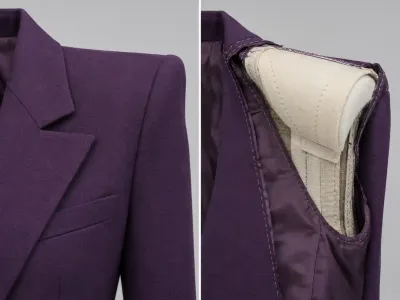
A shoulder pad is a shaped insert - foam, felted wool, or layered fabric built up into a wedge - stitched or basted into a garment's shoulder seam, sitting between the outer fabric and the wearer's own shoulder to extend the visible shoulder line outward well past where a body's actual anatomy ends. The technique itself predates this decade by generations, showing up in various forms in 1940s tailoring among others, but the 1980s pushes both the scale of the pad and the sheer number of garment categories it gets built into further than almost any prior period.
What makes this worth treating as a distinct construction story rather than a simple accessory detail is the design logic it represents: rather than cutting a garment to flatter or follow a wearer's existing shoulder shape, the pad actively rebuilds that shoulder line into something wider and squarer than the body underneath it. Thierry Mugler's most architectural work pushes this to a genuinely sculptural extreme, treating the pad as load-bearing structure rather than subtle reinforcement; the shoulder-pad blazer that actually made it into department stores dials the same technique back to something wearable for an ordinary office day.
I think the reason this construction detail carries so much cultural weight, beyond its purely technical function, is how directly it borrows authority from menswear tailoring's own long-established broad-shoulder silhouette and grafts it onto women's clothing at genuine scale for the first time. The power silhouette doesn't work without this specific piece of structural engineering doing the actual work underneath it - take the pad out, and the same jacket reads as a completely different, far less assertive garment.