The 1950s 1950s
Taffeta
A crisp, tightly woven fabric prized for its structure and characteristic rustle - a go-to for full-skirted party and eveningwear that needed real body.
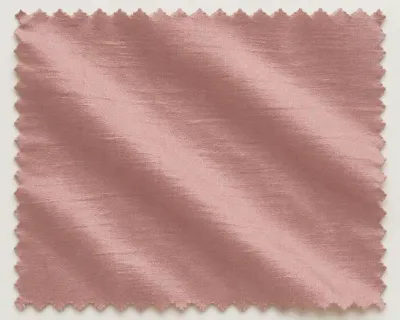
You can practically hear this decade's party dresses in the fabric itself - taffeta's stiffness and rustle are part of what makes a full skirt read as special-occasion rather than everyday.
Silk taffeta is the historical original and remains, through this decade, the higher-end option - a tightly woven plain weave using fine silk yarns that produces genuine, natural crispness along with that characteristic rustle, and a subtle sheen that shifts noticeably as the fabric moves. It drapes with real body but also real weight, holding a shape without going stiff or papery the way a lesser fabric might. Synthetic taffeta, typically woven from acetate or nylon by this decade, arrived as a substantially cheaper alternative that could mimic the crispness and much of the rustle at a fraction of silk's cost, which mattered enormously for a garment type like the cocktail dress that a much wider range of households wanted access to as home entertaining and cocktail parties became more broadly middle-class rituals rather than an upper-class exclusive.
The trade-off, and I think it's a real one rather than synthetic taffeta being simply "as good but cheaper," shows up mostly in how the fabric ages and moves. Silk taffeta tends to develop a soft, slightly worn sheen over years of wear that many collectors and dressmakers still find more attractive than synthetic taffeta's sheen, which can read as slightly flatter or more uniformly glossy even fresh off the bolt, and doesn't develop that same complexity with age. Synthetic taffeta also tends to hold a crease more stubbornly once it's been packed or sat on for a while, where silk taffeta's crispness is a bit more forgiving and self-releasing. None of that stopped synthetic taffeta from becoming the more common choice for mass-market party and cocktail dresses through the decade - cost mattered more to most buyers than these finer differences - but if you're ever examining an actual period garment, it's usually possible to tell which you're looking at just by how the fabric behaves in your hands.