The 1960s throughout the 1960s
Crimplene and Easy-Care Synthetics
A stiff, textured polyester double-knit that held a garment's shape through the wash with no ironing required - the unglamorous fabric doing the quiet work behind the decade's simple, geometric silhouettes.
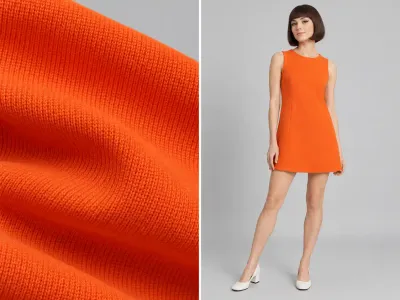
Crimplene - a textured polyester double-knit developed by ICI in Britain and launched commercially at the very start of the decade - doesn't get nearly the attention the era's more visually dramatic fabrics do, but it's worth an entry precisely because of how much unglamorous, practical work it did underneath the decade's showier trends. It's stiff rather than fluid, holds a crease or a shape well, resists wrinkling almost entirely, and can go through a home washing machine and come out needing no ironing at all - a genuinely significant convenience at a moment when more women were working outside the home and had measurably less time for garment care than a full-time homemaker a decade earlier might have had.
That stiffness is exactly what made it a natural match for this decade's simple, geometric silhouettes rather than a drawback. A shift dress or straight A-line skirt cut from crimplene held its clean, flat shape on the body and through repeated wear and washing in a way a softer, more fluid natural fiber wouldn't, without needing the lining, interfacing, or careful pressing a similar garment in wool or cotton might have required - see the entry on easy-care synthetic construction for more on how this changed actual garment-making. It was affordable, widely available in bold solid colors well suited to mod styling, and marketed heavily on practicality rather than glamour, which is exactly why it sold as well as it did to ordinary working and middle-class women rather than the boutique customers Quant or the couture houses were courting.
I think fabrics like this deserve real space in a project like this one precisely because they're so easy to skip past in favor of a more photogenic story like Op Art or PVC. Crimplene and its synthetic-knit cousins were what a huge share of actual, ordinary 1960s wardrobes were made from - the difference between a trend documented in magazines and the fabric genuinely filling closets across the decade, doing the unglamorous job of being practical, affordable, and low-maintenance while the more dramatic fabrics got the photographs.