The 1960s mid-1960s
Acrylic and Synthetic Knit Yarns
Orlon, Courtelle, and similar acrylic fibers gave home and machine knitting a cheap, easy-care wool substitute - distinct from Crimplene's double-knit weave, and aimed squarely at the knitting needle rather than the sewing machine.
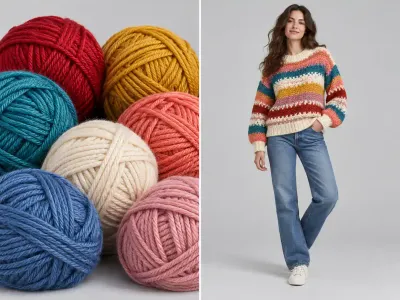
Acrylic yarns - sold under brand names like Orlon and Courtelle - answered a different problem than Crimplene did, even though both are synthetic fibers arriving in this same general period. Crimplene is specifically a double-knit polyester fabric, manufactured and sold by the yard for garment construction on a sewing machine. Acrylic yarn, by contrast, is sold on the ball for hand-knitting or domestic knitting machines, aimed at the enormous number of women still knitting their own or their family's sweaters, cardigans, and accessories at home rather than sewing woven garments.
That distinction matters because it put genuinely modern textile chemistry directly into a much older domestic craft tradition. Wool had always been the default hand-knitting fiber, but it's comparatively expensive, requires careful hand-washing, and can felt or shrink badly if mishandled. Acrylic yarn held its shape and color through ordinary machine washing, cost considerably less, and knitted up into a lighter, often softer fabric - a genuinely practical upgrade for anyone knitting garments regularly rather than buying them ready-made.
I think this fabric deserves separation from Crimplene specifically because conflating the two flattens a real distinction in how this decade's synthetic fiber revolution actually reached different parts of a woman's wardrobe - one transformed factory-scale garment manufacturing, largely feeding into the era's synthetic-blend easy-care construction more broadly, while the other quietly modernized a home craft tradition that had existed for generations, letting ordinary domestic knitters keep pace with the same "wash it and wear it again immediately" convenience showing up everywhere else in this decade's fabric story.