The 1960s mid-1960s
Empire Waist Construction
Raising the waistline seam to sit just under the bust rather than at the natural waist - a technique borrowed from Regency-era dressmaking and repurposed to make an already-short hemline read as playful rather than provocative.
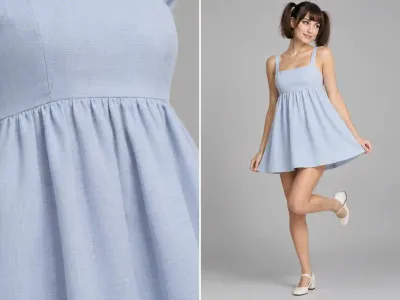
The empire waist isn't a 1960s invention by any stretch - the technique of placing the waistline seam high, just under the bust rather than at the natural waistline, goes back to the Regency and early-19th-century Empire silhouette it takes its name from. What's genuinely of-this-decade is the specific job the technique gets asked to do the second time around: rather than creating a graceful, column-like line the way it did two centuries earlier, it's repurposed here almost entirely to support the babydoll silhouette and its deliberately childlike, playful effect on an already very short hemline.
Constructing this seam correctly requires real precision that a lot of casual descriptions of "babydoll dresses" skip past: the seam has to sit high enough, right at the bust line, to genuinely separate the bodice from the skirt's fullness, then the skirt below it needs enough gathering or box pleating to swing and move rather than hang flat, which takes noticeably more fabric and more careful pattern drafting than the simple, dart-free straight seam running through most of this decade's A-line and shift construction. Get the seam placement even slightly wrong - too low, or without enough fullness gathered into the skirt below it - and the whole "innocent, doll-like" effect the silhouette is going for collapses into something that just looks like an ordinary dress with an oddly placed seam.
I think this technique is worth its own construction entry rather than folding entirely into the babydoll silhouette piece because it's such a clean example of period revival happening at the level of pure pattern-cutting mechanics rather than surface decoration - a two-hundred-year-old seam placement, borrowed wholesale, doing an almost entirely different cultural job the second time it's fashionable. Dressmaking techniques get recycled across eras constantly, but rarely with this specific a gap between what a construction detail originally meant and what it's been repurposed to communicate.