The 1980s early 1980s
Princess Diana and Early-80s Dressing
A single 1981 wedding dress, with sleeves so dramatically puffed they needed their own supporting structure, put romantic eveningwear volume in front of a global television audience years before it became a runway staple.
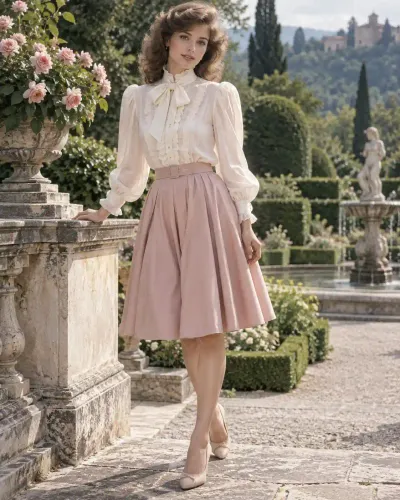
Diana Spencer's 1981 wedding to Prince Charles was watched by an estimated 750 million people worldwide, and her wedding gown - designed by David and Elizabeth Emanuel, built from ivory silk taffeta with a 25-foot train and dramatically full, puffed sleeves - put romantic, structurally exaggerated eveningwear in front of a genuinely global audience years before that same instinct became a runway staple. The sleeve shape in particular, full at the shoulder and gathered densely enough to need real internal support to hold its own puff, is an early, extremely high-profile instance of the same construction logic behind this decade's later leg-of-mutton sleeve revival, arriving several years before Christian Lacroix's more frequently cited 1987 couture debut popularized it further.
Beyond the wedding dress itself, Diana's early public wardrobe - worn as a very young, very visible new royal still finding her own style under intense press scrutiny - leaned toward romantic, ruffled blouses, puffed sleeves, and generous taffeta volume in a way that reads, in hindsight, as a genuinely mainstream, non-couture preview of maximalist eveningwear instincts that wouldn't fully dominate ready-to-wear until later in the decade. Her clothing choices were photographed and reproduced constantly by a press that had never before had this much sustained access to a young royal's everyday wardrobe evolution.
I think this entry earns its place less because Diana was a designer or trendsetter in any formal sense, and more because her wardrobe functioned as an accidental, extraordinarily high-visibility preview of where eveningwear volume was already heading - proof that the appetite for structured romantic maximalism this decade eventually settled into was building well before couture houses like Lacroix's gave it a formal runway name.