The 1960s early 1960s
The Trapeze Dress
A dress that narrows at the shoulder and widens steadily toward the hem, tracing a clean triangular shape - Yves Saint Laurent's 1958 Dior collection idea, still very much in circulation as the new decade opened.
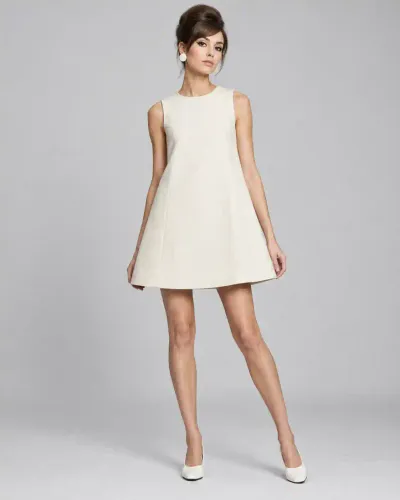
The trapeze dress takes its name directly from the shape it traces: narrow at the shoulder, widening in a clean, continuous line down to a considerably wider hem, tracing a triangle rather than following the body's actual waist and hip curve at all. Yves Saint Laurent introduced the shape for the House of Dior in his January 1958 collection - his first as head designer there, at just 21 years old - and it remained in wide circulation as this decade opened, an early sign of the era's move away from the fitted, waist-defined silhouettes that had dominated the previous decade.
Structurally, the trapeze is a close cousin of the A-line cut that would become such a construction default a few years later, sharing the same basic logic of building flare into the side seams themselves rather than relying on a fitted waist and separate gathered skirt panel. The trapeze pushes that flare more dramatically and starts it higher, at the shoulder or upper bust rather than the natural waistline, producing a more pronounced triangular silhouette than the A-line's gentler taper.
I think the trapeze dress earns a place in this project specifically as a transitional garment - it's couture's own early experiment with the unfitted, dartless construction logic that Mary Quant and the wider youthquake scene would take much further and much more affordably only a few years later. Tracing the line from a 21-year-old Saint Laurent's couture debut through to a mass-market Chelsea boutique shift dress is a genuinely clear illustration of how quickly and thoroughly this decade's simplified construction ideas moved from the top of the fashion hierarchy toward its most accessible end.