The 1930s throughout the 1930s
Lounging and Hostess Pyjamas
Wide-legged pyjamas in silk, satin or lamé, worn at home for cocktails and informal entertaining - the glamorous, after-dark cousin of beach pyjamas, and another way trousers crept into women's wardrobes.
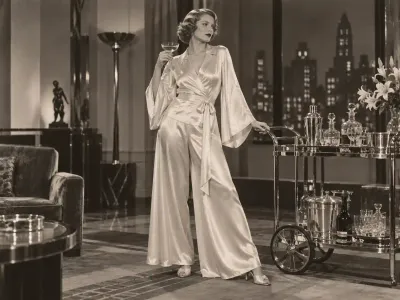
Beach pyjamas were for the seaside. Their indoor cousin was for the evening, and it was far more glamorous. Lounging pyjamas - sometimes called hostess pyjamas or evening pyjamas - were wide-legged trouser outfits in luxurious fabrics, worn at home for relaxing, receiving friends, and informal entertaining.
A typical outfit had very wide, flowing trousers, often so full they looked like a long skirt when the wearer stood still, with a matching top, tunic, or jacket. They were cut from the same fabrics as evening dresses: silk satin, crepe, velvet, printed chiffon, and even lamé. Many were cut on the bias so they flowed like an evening gown, and some came with long sashes, wide sleeves, or dramatic collars. They were worn with elegant slippers or heeled mules, jewellery, and full make-up. Despite the name, these weren't nightclothes - they were for being seen.
They grew out of a changing style of socialising. The cocktail party, a relatively new and informal kind of evening entertainment, was very fashionable in the 1930s, and a hostess needed something glamorous but relaxed to wear in her own home. The tradition goes back further, too: the Victorian tea gown had played a similar role as a looser, at-home garment for intimate entertaining. Lounging pyjamas were the modern, more daring version - and a hostess in trousers suggested a very up-to-date, sophisticated household.
Hollywood did a great deal to spread the look. Films of the decade are full of stars lounging on sofas in satin pyjamas, lighting cigarettes, and mixing cocktails in elegant Art Deco apartments, and that image of effortless, luxurious modern living was hugely appealing. Like beach pyjamas, lounging pyjamas were a way for women to wear trousers without it being seen as a statement - the context made them acceptable. I think they're one of the most glamorous things the decade produced, and they also show how many different, quiet routes trousers took into women's wardrobes long before they were accepted everywhere.