The 1960s late 1960s
The Tunic Dress
A long, straight overdress worn over trousers or leggings - a shift dress stretched out and repurposed as a top layer, right as the decade's mod simplicity started drifting toward bohemian layering.
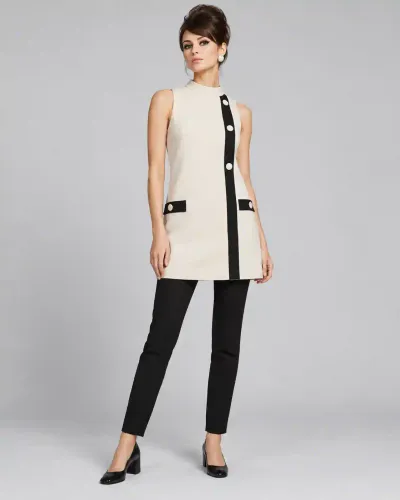
The tunic dress takes the shift dress's straight, dartless construction and stretches it into a longer overgarment, worn not as a standalone dress but layered over trousers, leggings, or a slip - a top-and-bottom combination rather than the shift's clean, single-garment simplicity. That layering shift matters more than it might look: the shift dress belongs entirely to the mod silhouette's minimal, uncomplicated aesthetic, while the tunic's combination of pieces points toward the more assembled, mix-and-match instinct that layered bohemian dressing would run with much further both later this decade and well into the next.
Construction-wise, the tunic borrows the shift's straight or slightly A-line cut nearly unchanged, simply extended in length and often finished with a lower slit or looser hem to accommodate movement over trousers underneath. It's a genuinely economical piece of pattern reuse - the same basic dartless shape doing an entirely different styling job just by changing its length and what's worn underneath it, rather than requiring a whole new construction approach.
I think the tunic dress is a useful hinge point in this project's late-1960s story - it's still recognizably built from the same simplified construction vocabulary the mod silhouette established earlier in the decade, but its styling logic, layered over trousers rather than worn alone, is already leaning hard toward the hippie silhouette's more eclectic, assembled approach to getting dressed that closes out the decade and carries straight into the next one's own bohemian opening.