The 1990s throughout the 1990s
The Hip-Hop Baggy Silhouette
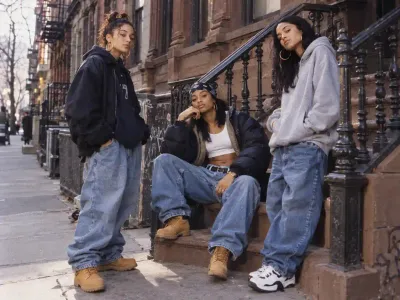
Oversized jeans, big jackets, work boots and designer logos - hip-hop's 1990s silhouette, and the women who wore it their own way, from TLC's baggy layers and Aaliyah's boyish cool to Lil' Kim's high glamour.
The 1980s hip-hop entry ends by pointing out that the fashion establishment took years to notice hip-hop style. In the 1990s, it noticed. Hip-hop became one of the most powerful forces in fashion, and its signature shape was big.
The baggy silhouette was built on size. Jeans were cut very wide and worn low on the hips, often sagging, with the hems stacked over the shoes. Tops were oversized: huge T-shirts, hooded sweatshirts, sports jerseys, and rugby shirts. Outerwear was bulky - padded puffer jackets, workwear jackets, and big coats - and the classic footwear was the tan work boot, especially Timberlands, along with sneakers. Baseball caps, bandanas, and gold jewellery completed the look. The shape itself, with its loose fit and dropped crotch, is covered in the oversizing entry.
Logos mattered enormously. Hip-hop artists adopted brands like Tommy Hilfiger, Polo Ralph Lauren, Nautica, and Guess, sometimes to the brands' surprise, and wearing them in bigger sizes and bolder ways changed how those labels were seen. Black-owned streetwear brands such as Cross Colours (1989) and FUBU (1992), founded around the turn of the decade, made clothes specifically for this market, and the idea that hip-hop could build its own fashion labels grew from here.
Women in hip-hop and R&B shaped the look in their own ways. TLC wore brightly coloured, oversized clothes and baggy jeans in the early 1990s, sometimes pinned with condoms as a safer-sex message. Aaliyah combined baggy jeans and big jackets with cropped tops, bandanas, and sunglasses, a boyish, cool look she also wore as the face of a Tommy Hilfiger campaign. Missy Elliott played with volume and shape in her videos. And at the other end, Lil' Kim wore sexy, ultra-glamorous designer fashion, including Versace, showing that hip-hop style could mean luxury as much as streetwear.
What I find important here is the direction of influence. For most of fashion history, style moved from couture down to the street; in 1990s hip-hop, it increasingly moved the other way, with designer labels following the lead of young Black artists and fans. That shift is one of the most significant fashion changes of the late twentieth century.