The 1950s 1950s
Cold War Conservatism
Fashion's return to structured, traditionally feminine silhouettes has been read by historians as part of a broader postwar push back toward conventional domestic roles amid Cold War anxiety.
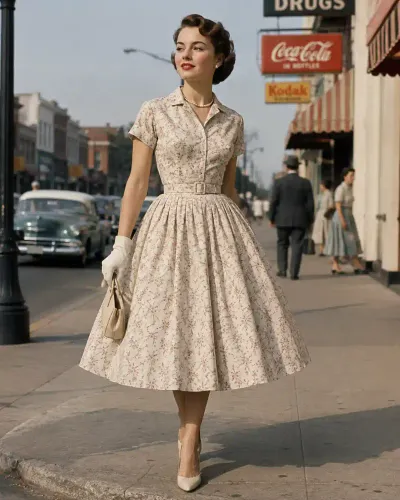
I find this one of the more genuinely debated threads in 1950s fashion history - how much of the era's emphasis on structured, hyper-feminine dress reflects a real cultural anxiety about gender roles versus just aesthetic pendulum-swing after wartime austerity.
The case for reading this decade's fashion as genuinely politically loaded rests on some fairly direct evidence. Popular postwar rhetoric - government messaging, magazine advice columns, a wave of domestic-advice literature - explicitly encouraged women who'd worked in wartime industry to return to homemaking once men came back from service, and the decade's dominant silhouettes (a cinched, structured waist; a full skirt suited to a life organized around the home rather than a factory floor) map fairly comfortably onto that same domestic ideal. Cold War anxiety adds a specific edge to that argument too - a stable, visibly conventional nuclear family, with correspondingly conventional gender presentation, got framed repeatedly in period rhetoric as a bulwark against communism, which historians making this case read as a genuine, if often unstated, political undercurrent running beneath the era's fashion conservatism, not just an aesthetic coincidence.
The counter-argument, which I don't think should be dismissed either, is more purely aesthetic and cyclical: full, structured silhouettes are also simply a natural pendulum swing back from over a decade of wartime fabric restriction and the boxier, more utilitarian shapes that restriction produced - fashion has a long, well-documented habit of overcorrecting hard against whatever immediately preceded it, independent of any political messaging at all. My honest read is that both forces were almost certainly operating at once, reinforcing rather than competing with each other - a fabric-hungry, waist-cinched silhouette was going to feel novel and desirable after wartime scarcity regardless of politics, and that same silhouette also happened to visually reinforce exactly the domestic ideal Cold War-era culture was actively promoting elsewhere. I'd resist any account that credits one explanation entirely and dismisses the other - the dress reform movement entry in the Victorian section makes a similar point about earlier fashion controversies carrying real political weight, and I think the same caution about oversimplifying applies here too.