The 1990s throughout the 1990s
Distressed and Pre-Worn Finishes
Ripped knees, faded washes, frayed hems and sandblasted 'wear' - the factory techniques that made new clothes look old, feeding grunge's thrift-store look to the mass market, at a real cost to garment workers.
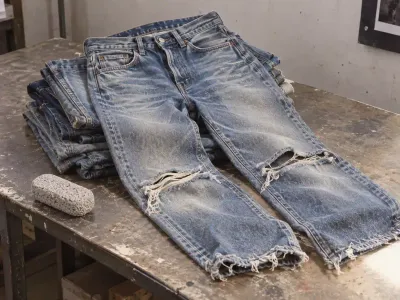
The 1980s acid wash entry tells the story of a bold, obviously treated look. The 1990s went for something subtler and, in a way, stranger: new clothes made to look genuinely old and worn, as if they'd been owned for years. That's the idea behind distressed and pre-worn finishes.
The look came from grunge and thrift culture. Real second-hand jeans had faded patches where the wearer's body rubbed them, holes at the knees, frayed hems, and soft, broken-in fabric. As grunge went mainstream, many people wanted that look without the hours of wear or thrift-store hunting, and manufacturers learned to produce it in factories.
Several techniques did the job. Stone washing, which tumbles garments with pumice stones, softened and faded denim; enzyme washing used enzymes to wear down the fibres in a gentler, more controlled way. Sandblasting fired abrasive sand at specific areas to create realistic faded patches on the thighs and seat. Hand-sanding, scraping, and grinding made wear marks, "whiskers" (creases at the hips), and frayed edges. Knees and pockets were deliberately ripped or cut, and seams and hems were left raw. These finishes spread from jeans to flannel shirts, T-shirts, and jackets, which were washed to look faded and soft.
Designers had their own versions. Martin Margiela used genuinely old garments and left traces of their previous lives, a much more thoughtful take on the idea of worn clothing, following the 1980s deconstruction movement.
There's an important and uncomfortable side to this story. Some of these techniques were harmful to the people who did them. Sandblasting, in particular, exposed workers in denim factories to silica dust, which can cause silicosis, a serious and sometimes fatal lung disease. After campaigns, many major brands banned sandblasting from around 2010, but the problem showed how the cost of a fashion trend can fall on the people making the clothes. I think it's worth remembering whenever a new pair of jeans comes "pre-worn": the look of age and authenticity was often manufactured, sometimes at a real human cost.