The 1950s late 1940s, on the eve of the decade
Postwar Rationing's Tail End
Formal clothes rationing in Britain and France actually ended by 1949 - but Dior's fabric-hungry 1947 New Look landed squarely while it was still in force, which is exactly why it read as so radical, and why the memory of scarcity still shaped spending well into the new decade.
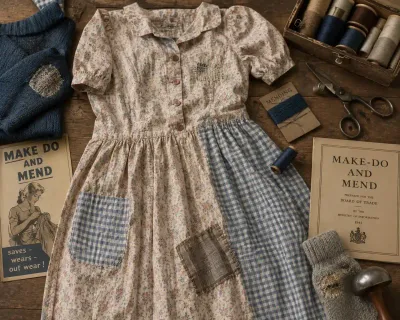
It's worth getting the timeline right here: Dior's New Look debuted in February 1947, while Britain and France were still under formal clothes rationing (which didn't end in Britain until March 1949) - that's exactly why the sheer amount of fabric in one skirt read as so extravagant, even scandalous, at the time. By the time the 1950s actually start, formal rationing itself is already over, but the psychological hangover of years of scarcity didn't disappear overnight.
The shift wasn't instant, even after the formal legal restrictions lifted - years of genuine scarcity leave habits that outlast the shortage itself. British households especially had spent the better part of a decade under some form of clothes rationing (introduced in 1941, not fully abolished until March 1949), which meant an entire adult generation had internalized real, practiced habits around mending, remaking, and stretching a limited wardrobe as far as it would go, out of necessity rather than thrift as an abstract virtue. Those habits didn't simply switch off the moment coupons stopped being required - plenty of households continued economizing on fabric and treating a new garment as a genuine, carefully-considered purchase well into the early 1950s, even once the legal ability to buy freely had returned.
What actually broke that lingering caution, more than the end of rationing itself, was the return of sustained economic growth across the early-to-mid 1950s - rising real wages, expanding consumer credit, and a genuine sense that postwar recovery was now a durable trend rather than a fragile, possibly temporary reprieve. Dior's New Look is really the perfect symbol for that whole transition precisely because of its timing: a fabric-hungry silhouette debuting while rationing was still technically in force reads as audacious and provocative in 1947, but the same silhouette, by the time it's mainstream fashionable dress in 1950 or 1951, reads instead as confirmation that scarcity was genuinely over and abundance was here to stay. I think that's the real story behind this entry's dates - the New Look didn't just anticipate the decade's return to fabric-heavy fullness, it gave a whole generation of women recovering from real, lived scarcity a specific, visible signal that spending freely on fashion again was permissible, even encouraged, after years of being told the opposite.